

Why List Quality, Not List Size, Drives Deliverability and Email Performance
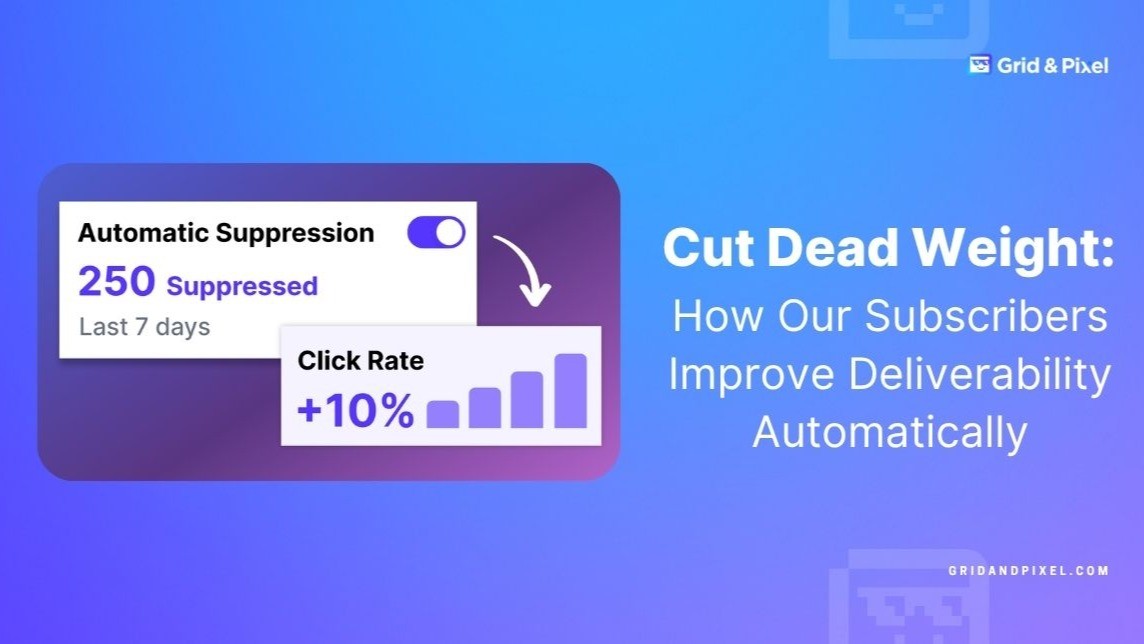
The goal is not to remove people randomly.
The goal is to remove the wrong signals.
When you remove low-intent users:
engagement rates go up
deliverability improves
performance becomes more predictable
This is not about sending more emails.
It is about sending to people who are still paying attention.
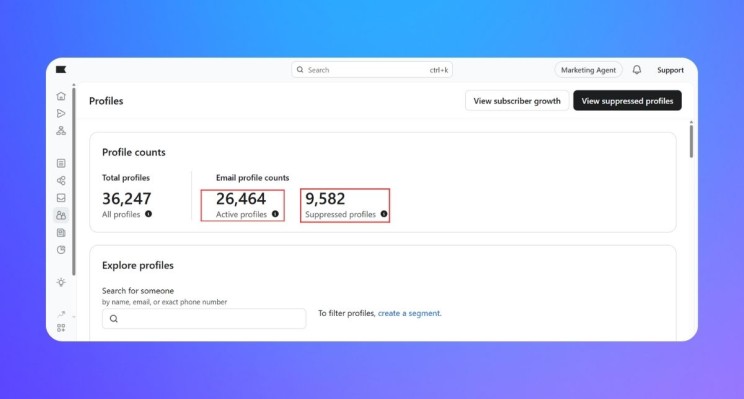
Inside Klaviyo:
36,247 total profiles → everyone collected over time
26,464 active profiles → people you can actually email
9,582 suppressed profiles → inactive, bots, or no intent
Active profiles = your real audience
This is:
who you pay for
who receives your emails
who drives performance
The gap is this:
Most brands see total profiles as growth but don’t actively manage who stays in their active list
So even within active profiles, there are still users who:
will never open
will never click
will never buy
And that’s what quietly hurts performance.
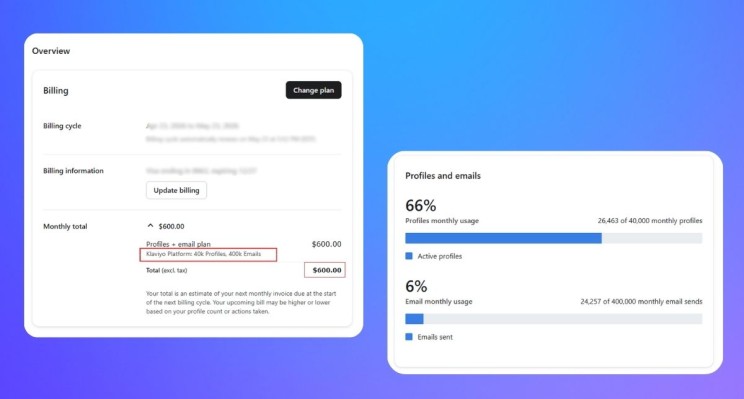
Here’s what’s happening:
The brand is paying $600/month
That plan covers 40,000 profiles
But they are only using ~26,000 active profiles
They are overpaying for unused capacity
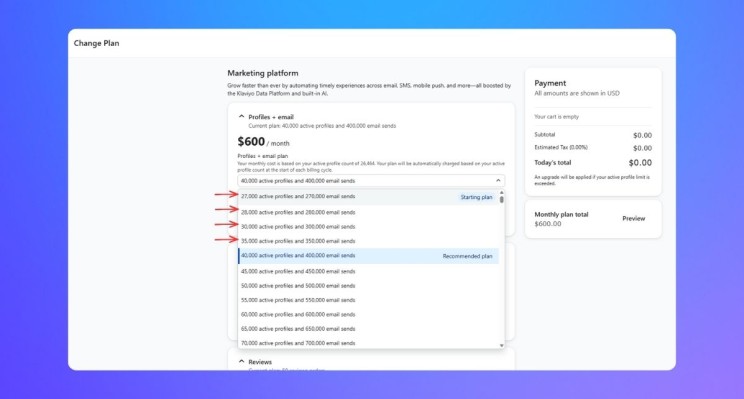
This dropdown shows how pricing scales based on active profile count.
In this case, the brand is paying for a higher tier than needed.
If they adjust to a 30,000 profile tier, they could save:
~ $100 per month
~ $1,200 per year
No changes to campaigns. No changes to creatives. No changes to strategy.
Just by fixing list quality.
When you reduce active profiles through proper suppression:
you move into a lower pricing tier
your monthly cost drops immediately
The problem is most brands don’t act on this.
Not because it’s complicated.
But because they lack:
clear rules on who to remove
a consistent definition of inactivity
a system to maintain it over time
So instead, they keep paying for users who no longer drive value.
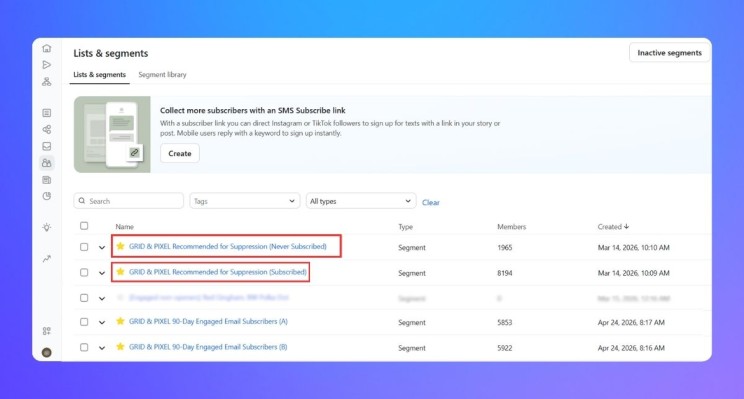
This is where execution becomes structured.
Grid & Pixel creates two key suppression segments:
1. Recommended for Suppression (Never Subscribed)
Users who:
never opened an email
never visited the site
never started checkout
never purchased
no activity in the last 90 days
These are pure low-intent users
2. Recommended for Suppression (Subscribed)
Users who:
opted in
but have not opened emails in 180 days
no browsing activity
no checkout behavior
still never purchased
These are inactive subscribers
Past buyers are NOT suppressed
Because they still carry future value
This is not aggressive cleanup.
This is intent-based filtering
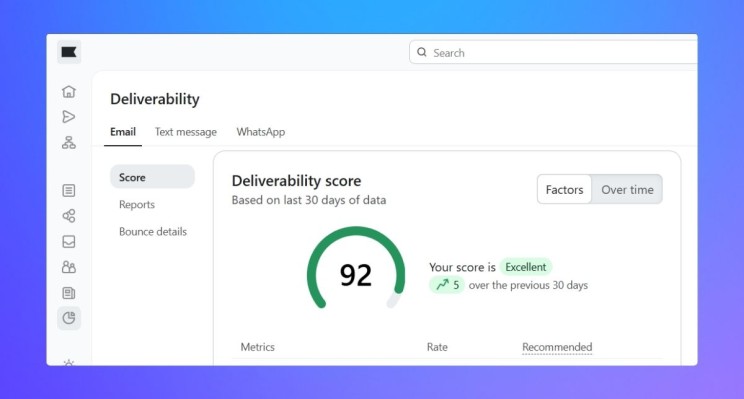
Deliverability score: 92 (Excellent)
This is not random.
It is driven by:
open rates
click rates
engagement consistency
If you send to 100 people and:
20 have not engaged in 6 months
Those 20 are:
dragging down your engagement
hurting your sender reputation
If you suppress them:
engagement rate improves instantly
inbox placement improves
performance stabilizes
This is how suppression connects directly to deliverability.
This is where Grid & Pixel changes the game.
This is not manual work.
Once enabled:
segments are synced via API
profiles are evaluated continuously
suppression runs daily
Not monthly. Not one-time cleanup.
Daily execution, automatically.
That is the difference.
You are not managing lists.
Grid & Pixel is.
Low-intent users are identified and removed continuously, so every send is cleaner, stronger, and more efficient.
Most brands think they have a growth problem.
They don’t.
They have:
a list quality problem
a cost efficiency problem
a deliverability problem
All tied to one root issue:
sending to the wrong people
Grid & Pixel fixes that at the system level.
So instead of chasing more subscribers, you focus on:
better signals
cleaner lists
stronger engagement
That is how modern brands:
improve deliverability
increase click rates
reduce Klaviyo costs
and scale email revenue properly