.png?width=226&height=35&name=Grid%20%26%20Pixel%20Logo%20(1).png)
The goal is not to remove people randomly.
The goal is to remove the wrong signals.
When you remove low-intent users:
-
engagement rates go up
-
deliverability improves
-
performance becomes more predictable
This is not about sending more emails.
It is about sending to people who are still paying attention.
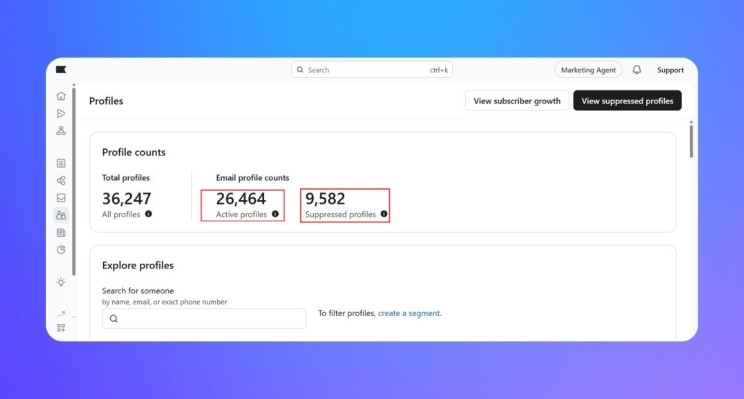
Inside Klaviyo:
-
36,247 total profiles → everyone collected over time
-
26,464 active profiles → people you can actually email
-
9,582 suppressed profiles → inactive, bots, or no intent
Active profiles = your real audience
This is:
-
who you pay for
-
who receives your emails
-
who drives performance
The gap is this:
Most brands see total profiles as growth but don’t actively manage who stays in their active list
So even within active profiles, there are still users who:
-
will never open
-
will never click
-
will never buy
And that’s what quietly hurts performance.
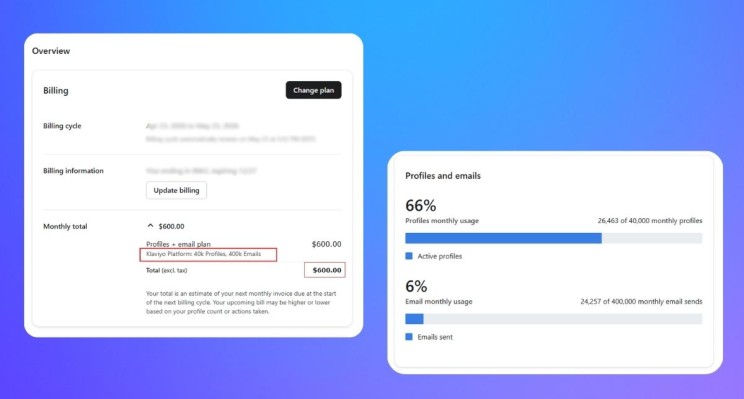
Here’s what’s happening:
-
The brand is paying $600/month
-
That plan covers 40,000 profiles
-
But they are only using ~26,000 active profiles
They are overpaying for unused capacity
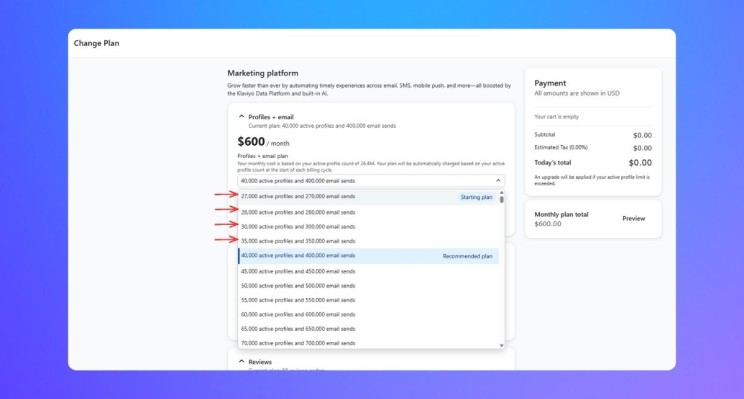
This dropdown shows how pricing scales based on active profile count.
In this case, the brand is paying for a higher tier than needed.
If they adjust to a 30,000 profile tier, they could save:
-
~ $100 per month
-
~ $1,200 per year
No changes to campaigns. No changes to creatives. No changes to strategy.
Just by fixing list quality.
When you reduce active profiles through proper suppression:
-
you move into a lower pricing tier
-
your monthly cost drops immediately
The problem is most brands don’t act on this.
Not because it’s complicated.
But because they lack:
-
clear rules on who to remove
-
a consistent definition of inactivity
-
a system to maintain it over time
So instead, they keep paying for users who no longer drive value.
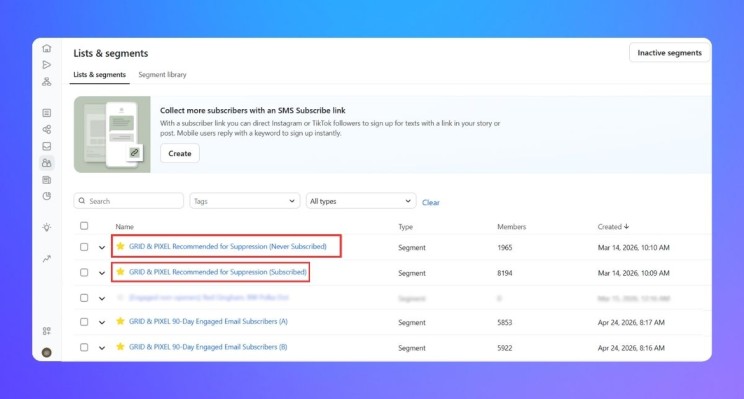
This is where execution becomes structured.
Grid & Pixel creates two key suppression segments:
Copy link
1. Recommended for Suppression (Never Subscribed)
Users who:
-
never opened an email
-
never visited the site
-
never started checkout
-
never purchased
-
no activity in the last 90 days
These are pure low-intent users
2. Recommended for Suppression (Subscribed)
Users who:
-
opted in
-
but have not opened emails in 180 days
-
no browsing activity
-
no checkout behavior
-
still never purchased
These are inactive subscribers
Past buyers are NOT suppressed
Because they still carry future value
This is not aggressive cleanup.
This is intent-based filtering
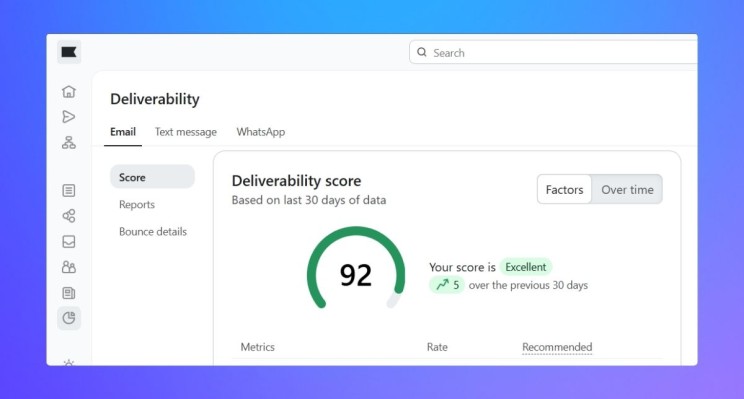
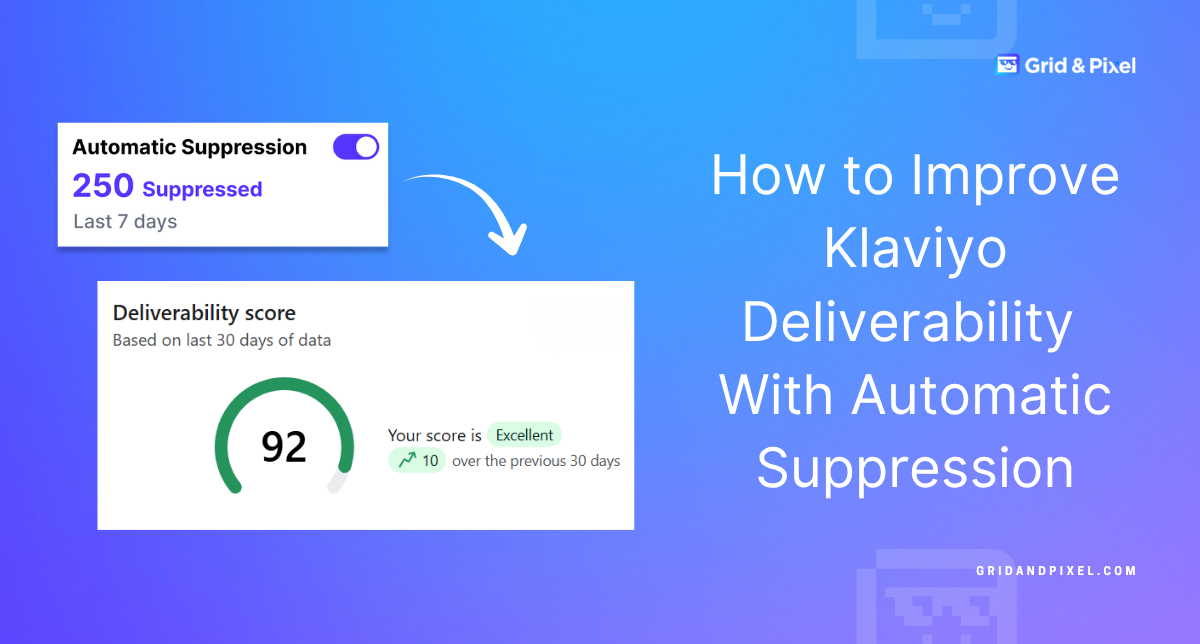
Deliverability score: 92 (Excellent)
This is not random.
It is driven by:
-
open rates
-
click rates
-
engagement consistency
If you send to 100 people and:
-
20 have not engaged in 6 months
Those 20 are:
-
dragging down your engagement
-
hurting your sender reputation
If you suppress them:
-
engagement rate improves instantly
-
inbox placement improves
-
performance stabilizes
This is how suppression connects directly to deliverability.
This is where Grid & Pixel changes the game.
This is not manual work.
Once enabled:
-
segments are synced via API
-
profiles are evaluated continuously
-
suppression runs daily
Not monthly. Not one-time cleanup.
Daily execution, automatically.
That is the difference.
You are not managing lists.
Grid & Pixel is.
Low-intent users are identified and removed continuously, so every send is cleaner, stronger, and more efficient.
Most brands think they have a growth problem.
They don’t.
They have:
-
a list quality problem
-
a cost efficiency problem
-
a deliverability problem
All tied to one root issue:
sending to the wrong people
Grid & Pixel fixes that at the system level.
So instead of chasing more subscribers, you focus on:
-
better signals
-
cleaner lists
-
stronger engagement
That is how modern brands:
-
improve deliverability
-
increase click rates
-
reduce Klaviyo costs
-
and scale email revenue properly